What Should You Do First When You Need a Desentupidora in Pinhais PR?
 shayan
What Should You Do First When You Need a Desentupidora in Pinhais PR?
Most guides start with the phone call. That is not where the problem starts. The first action is to protect the property and stop the source of the overflow, because every minute of running water turns a blocked drain into a wet floor, a damaged baseboard, or a contaminated kitchen. As a support technician who has handled these tickets, I can tell you that the difference between a quick fix and a costly repair is usually what the resident does in the first ten minutes. If you are searching for a desentupidora Pinhais PR, the right sequence is: stop the water, contain the mess, note what you see, and only then call for professional help.
Step 1: Stop Using Water and Isolate the Affected Fixture
Before anyone picks up a plunger, close the angle valve under the sink, turn off the shower, or stop the washing machine mid-cycle. A blocked pipe under pressure keeps pushing wastewater back through the lowest opening, which is often the floor drain. Stopping water use is the single most effective action a resident can take while waiting for a technician.
If the blockage is in the main line, shutting the general water register may be necessary. In apartments, that register is often in a service area or a shaft, and the building manager should be contacted. Do not keep flushing a toilet that is already rising; each flush adds several liters to a pipe that cannot drain.
Which fixtures to check first
- Floor drains in the laundry area and bathroom, which usually back up first.
- The kitchen sink, especially if the dishwasher drains into the same line.
- Toilets, which show the clearest sign of a main-line blockage.
Step 2: Contain the Mess and Protect What Can Be Saved
Once the water is off, move rugs, boxes, and electrical appliances away from the wet area. Wastewater from a blocked sewer line is not clean water; it carries organic matter and bacteria, so bare feet and open sandals are a bad idea. Use gloves and rubber boots if you have them, and keep children and pets out of the room.
If the backup is coming from a floor drain, a folded towel around the base slows the spread but does not seal it. Do not tape over the drain completely: pressure can push the water into another fixture or into the wall. The goal is to direct the flow toward a safe area, not to trap it.
Take a photo of the affected area before cleaning anything. Photos help the technician understand the source, and they are useful if the damage involves a condominium insurance claim. A support ticket with a clear photo is resolved faster than one that only says "the drain is clogged."
Step 3: Gather the Information the Technician Will Ask For
When you contact a desentupidora Pinhais, the person on the phone will ask a short set of questions. Having the answers ready saves time and helps the team bring the right equipment, from a manual auger to a high-pressure jetting truck.
Questions you should be ready to answer
- Which fixtures are backing up, and is the problem in one room or several?
- Is the water clear, gray, or dark with solid waste?
- Is there a smell of sewage in the area?
- When did the problem start, and did it follow heavy rain?
- Has anyone already tried a plunger, chemical drain cleaner, or a manual snake?
That last point matters. Chemical products left in the pipe can splash back when a technician opens the line, and they can damage certain types of tubing. Tell the team what was used and when. This is one of the details most guides leave out, and it directly affects how the job is done safely.
Step 4: Choose the Right Type of Service for the Blockage
Not every clog needs the same tool. A single slow sink is usually a local obstruction of grease and soap residue. A floor drain that backs up when the toilet flushes points to the main line. Understanding the difference helps you ask the right questions and avoid paying for a service that does not match the problem.
| Sign | Likely location | Typical method |
|---|---|---|
| One sink drains slowly | P-trap or branch line | Manual auger or small snake |
| Floor drain backs up with toilet use | Main sewer line | Motorized cable or hydro-jetting |
| Multiple fixtures affected after rain | External network or inspection box | Camera inspection and jetting |
For main-line blockages, hydro-jetting is often the most thorough option because it scours the pipe walls instead of just punching a hole through the clog. Grease, roots, and scale are removed rather than pushed further down. A camera inspection before or after the service confirms whether the pipe is clear and whether there is a crack or root intrusion that will cause the problem to return.
Step 5: Know What to Expect During the Visit
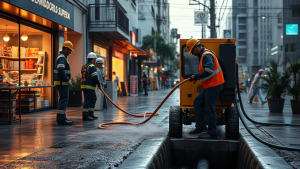
A professional visit usually follows a predictable sequence. The technician inspects the affected fixtures, locates the access point, and confirms the method. Then the equipment is set up, the line is cleared, and water flow is tested at every connected fixture. Finally, the area is checked and the resident receives guidance on prevention.
In houses, the access point may be an inspection box in the yard or a cleanout near the foundation. In apartments, the technician may need to work from a shaft or a common area, which requires coordination with the building manager. Access is the most common cause of delay in condominium calls, so unlocking gates and clearing the path to the cleanout before the team arrives is genuinely useful.
Emergency service is not only about unclogging. A technician who notices a broken seal, a loose connection, or a venting problem will point it out because those issues cause repeat backups. Ask for that feedback before the team leaves; it is easier to schedule a preventive repair than to call again in three weeks.
Step 6: Avoid the Mistakes That Turn a Clog into a Repair
The most expensive tickets I have seen started with a well-intentioned DIY attempt. Chemical drain cleaners are the main culprit. They generate heat, can damage PVC joints, and leave a caustic liquid in the pipe that is hazardous to the technician and to the resident. If the clog does not clear after one attempt, stop and call a professional.
Another common mistake is using a plunger on a main-line blockage. The pressure can force wastewater out through another fixture or loosen a joint that was already weak. Never open a cleanout cap while water is backed up: the contents can release suddenly and cause a burn or a contamination risk. And do not ignore a persistent sewage smell, even when the drain seems to flow; it often indicates a dry trap or a vent issue that will eventually cause a blockage.
Prevention habits that actually work
- Use a drain strainer in the kitchen sink and clean it weekly.
- Never pour cooking oil or grease down the drain, even with hot water.
- Flush only toilet paper; wipes labeled "flushable" still accumulate.
- Have the main line inspected every couple of years in older properties.
Step 7: Confirm the Result and Keep a Record
Before the technician leaves, run water at every fixture that was affected. Watch for slow drainage, gurgling, or a return of the smell. A line that is truly clear drains steadily and does not bubble in the adjacent drain. If something still feels wrong, say so while the team is on site; a follow-up visit is easier to arrange at that moment.
Keep the service record, including the date, the method used, and any recommendation. If the same line backs up again within a short period, that record helps the next technician avoid repeating the same step and points toward a deeper cause such as root intrusion or a collapsed section of pipe. For residents and building managers in Pinhais, having a reliable contact for a desentupidora em Pinhais PR before an emergency happens is the practical closing action: save the number, note where the cleanout is, and keep the first-step checklist where everyone in the household can find it.
That is the sequence that works. Stop the water, contain the damage, gather the facts, match the method to the blockage, and confirm the result. The phone call matters, but it is the fourth step, not the first. Handle the first three well and the fourth becomes a routine service instead of an emergency.